The Office of Ale-Conner
An Ancient Office, Under Renewal
One of the City’s oldest civic roles, the Ale-Conner traces back to the Assize of Bread and Ale. Four are still elected each year at Common Hall. This site is its home: reviving the role, supporting good and safe pubs in the Square Mile, and sharing seven centuries of heritage with the curious.
A personal project by Liam Randall, Cooper and Citizen of London, to give the office fresh purpose for the 21st century.
What the Office Does
The office has no powers today, so its value lies in what it does for the people who live in, work in and visit the Square Mile.
£6,000 raised
Raised for charity at the 2026 Coopers’ Cask Race in Guildhall Yard, with 60 cadets racing alongside the livery teams.
The day in fullSafety first
Sharing the City’s Licensing Policy consultation and Safety Thirst, the Corporation’s safety accreditation for licensed venues, well beyond the livery.
Licensing and the liveries182+ pubs mapped
A map of every pub and bar in the City, three printable walking trails, the Family Tree of Beer, and a sourced history of the office.
Open the pub mapJust ask
The Cask Race is free to watch, and the badge is an open invitation: stop me anywhere in the Square Mile and ask what an Ale-Conner does.
About the badge
Service, Renewal, Purpose
I’m Liam Randall, and I began my civic journey as an Apprentice in the Worshipful Company of Coopers in 2011. I went on to serve as the Livery’s representative on the Court as Under Warden in 2024 and Upper Warden in 2025 before returning to the Livery. I’m a strong believer in making our traditions and heritage vibrant and visible, co-founding the Coopers’ Cask Race, an annual event in Guildhall Yard celebrating the coopering craft and the modern City. I intend to apply that same energy to this ancient Office.
Returned as one of four Ale-Conners at Common Hall on Midsummer Day 2026.
Find out more at randall.londonExplore the Square Mile
The Square Mile is home to over 180 pubs and bars, each with its own story. Browse the interactive map, filter by type, and follow one of three guided walking trails past some of the oldest and most historic pubs in the City of London.
Explore the Pub MapThe Family Tree of Beer
Every beer in the world traces its descent to three great fermentation families: Ale, Lager, and the wild ferments. Some seventy styles are laid out as a living tree, each one lit in the beer’s own colour.
Wander the branches
A Badge, and an Invitation
The office has no enforcement powers today, so it relies on being seen and asked about. The badge is there for that: spot it about the Square Mile and you’re welcome to stop me, ask what an Ale-Conner is, or simply talk about the City’s pubs and their history.
Its design draws on the office’s original job: a figure of justice weighing the ale, set on a cask beneath the arms of the City of London.
Curious to know more, or have a question for the Ale-Conner? Get in touch — the office is here to be used.
What is an Ale-Conner?
Seven centuries of quality, fairness, and good ale
The office of Ale-Conner emerged under the thirteenth-century Assize of Bread and Ale, which required every borough to appoint sworn officers to safeguard the quality of brewing. Ale-Conners tasted ale, checked measures, and hauled offending brewers before the court-leet. It was not a popular appointment: ale spoiled quickly before the introduction of hops, and the officer who dispensed fines was rarely thanked for it.
In London, four Ale-Conners have been elected at Common Hall since at least the fourteenth century. The medieval officer had real teeth: he could seize deficient measures, fine short-pouring landlords, and certify a brew as fit to sell. His leather breeches, worn to test the stickiness of ale, became one of the most enduring images associated with the office.
As brewing industrialised and central regulation took hold, the practical function of the office fell away. By the Victorian era it was a sinecure, one Dickens was happy to lampoon, though the election continued each Midsummer Day without interruption. The City of London, uniquely among English municipalities, preserved its ancient Common Hall elections long after the Municipal Corporations Act of 1835 swept them away elsewhere.
The office survives today as a ceremonial appointment, elected by the Liverymen of the City at Common Hall on Midsummer Day. The Lord Mayor presides, attended by the Sheriffs and Aldermen, and the ancient cry still rings out: “All those who are not Liverymen to depart the Hall on pain of imprisonment.” Four Ale-Conners are returned for the year.
Survival alone is not the end of the story. The office is a platform for the City’s pubs, the people who run and use them, its heritage trades, and the seven centuries of civic life that made London what it is.
Read the full history“All those who are not Liverymen to depart the Hall, on pain of imprisonment.”
Common Hall 2026
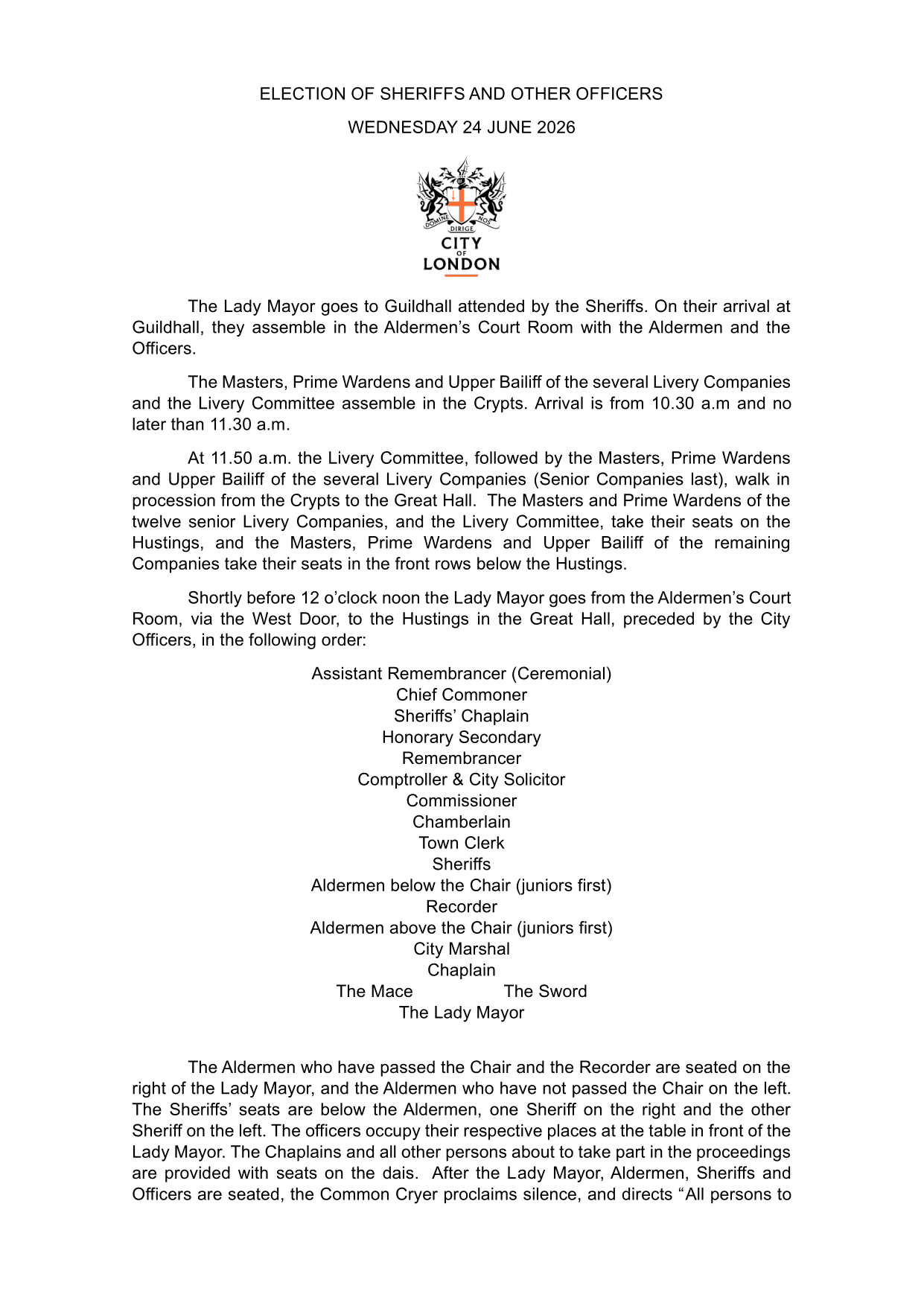
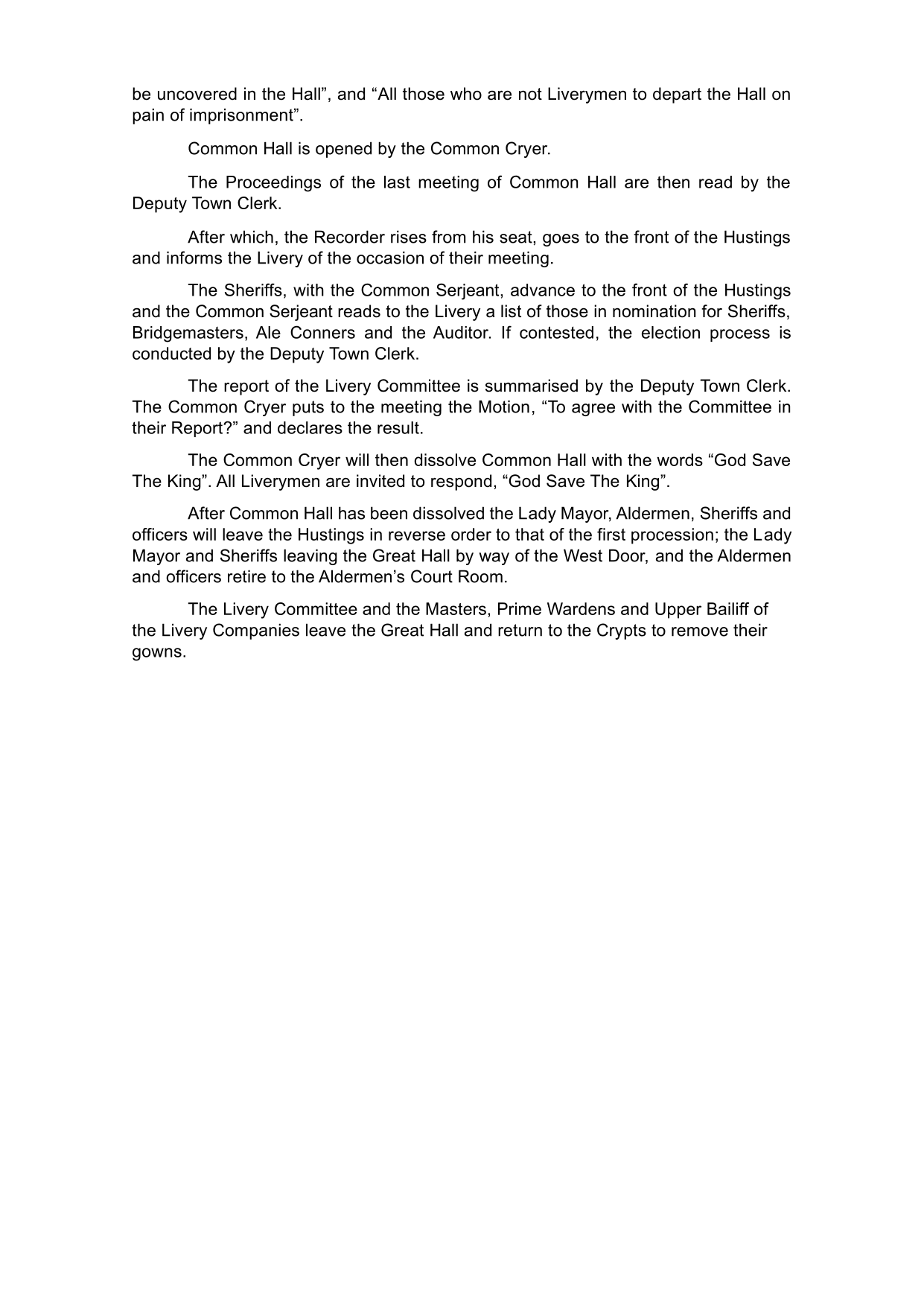
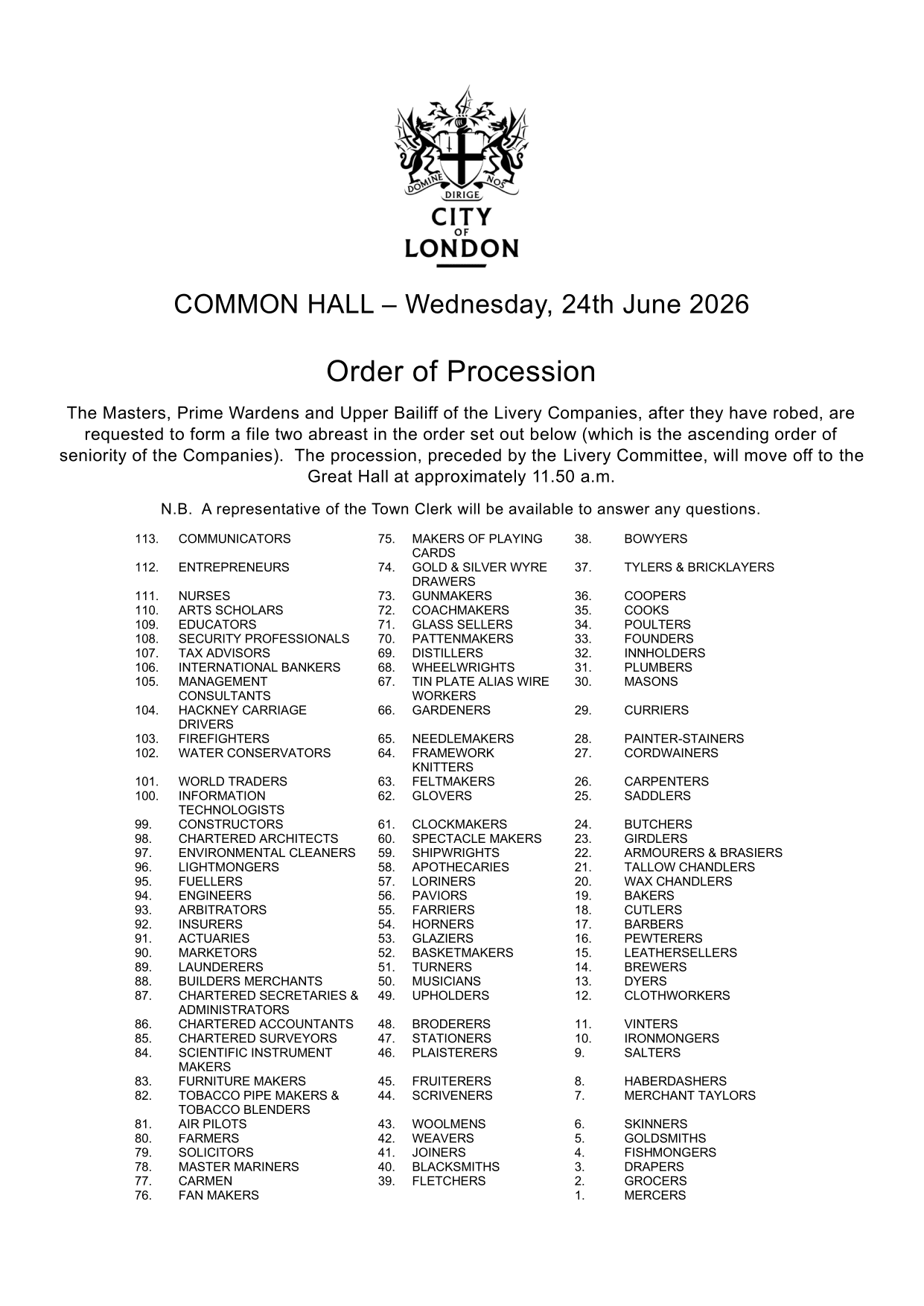
Common Hall is one of the City of London’s oldest democratic assemblies. Twice a year the Liverymen gather in the Great Hall at Guildhall: at Midsummer to elect the Sheriffs and other ancient officers, and in the autumn to choose the Lord Mayor. The custom reaches back to the Middle Ages and has continued, largely unbroken, ever since.
The Liverymen are the members of the City’s livery companies, the historic guilds of trade and craft, from the Mercers and Goldsmiths to the Coopers. Admitted to the livery of their company and made free of the City, they hold the right to vote in Common Hall: a civic franchise rooted in the Middle Ages, and one of the oldest still exercised in the country.
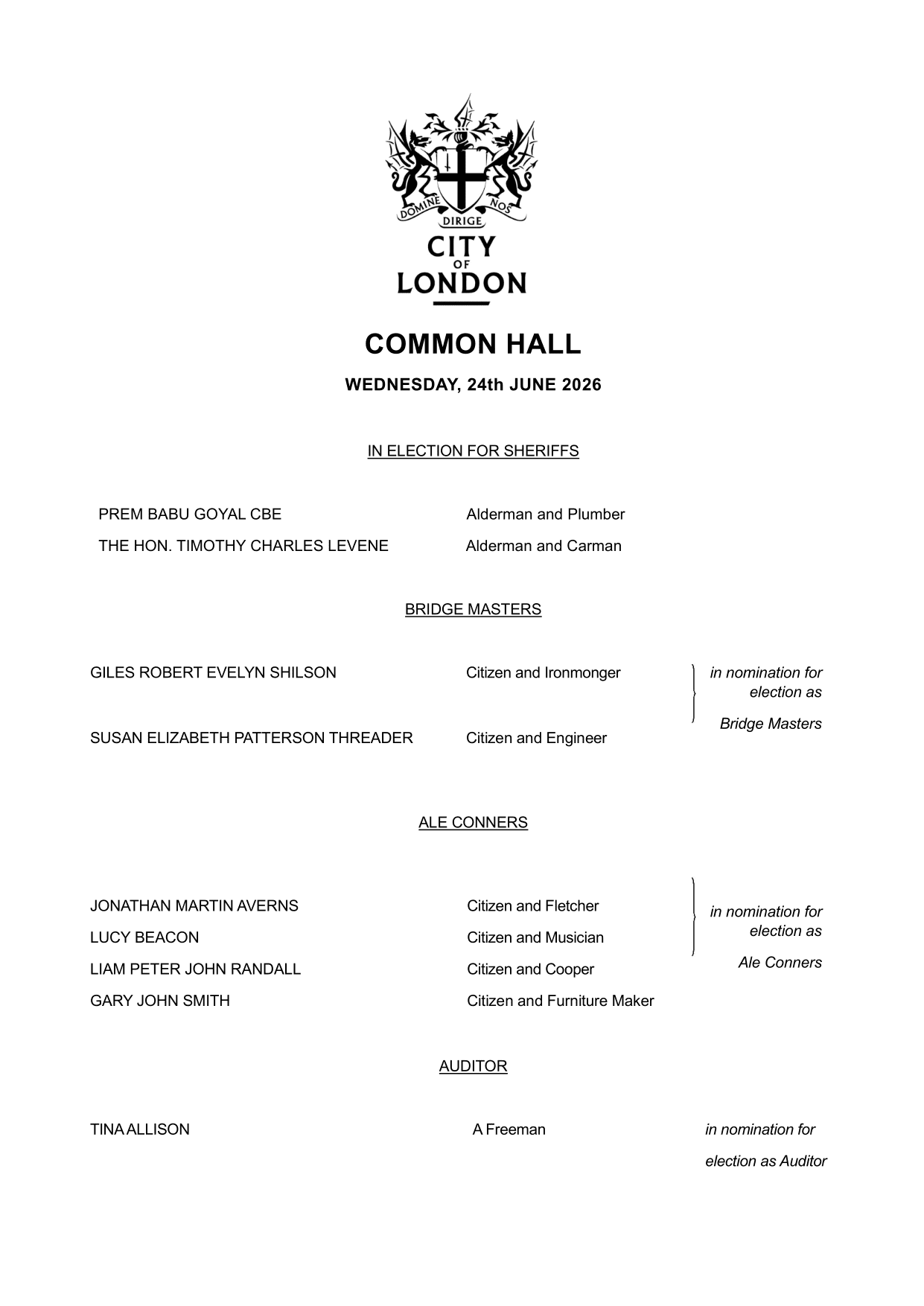
On Midsummer Day, Wednesday 24 June 2026, the Livery assembled to return two Sheriffs, two Bridge Masters, an Auditor, and four Ale-Conners. With as many candidates in nomination as there were places, the election was uncontested: rather than hold a ballot, the Livery agreed the Livery Committee’s report and the new officers were declared duly elected. Liam Randall, Citizen and Cooper, was among the four Ale-Conners returned.
From the Journal
An occasional record of the office at work — the three most recent entries

Beer from the Wood
Presenting the SPBW’s Best Beer from the Wood award for the Coopers’ Company — and why a society founded in 1963 to save wooden-cask beer still matters to the trade that makes the casks.
A Chain for the Sheriff
The presentation of the Shrieval Chain of Office and Badge to Alderman Tim Levene at Fishmongers’ Hall — a badge by City goldsmith Grant Macdonald that sets heraldry beside the digital age.
A Mile Under the Arches
The Bermondsey Beer Mile with the Innholders and the Coopers — 878 Victorian railway arches, two vanished giants of Southwark brewing, and the cheesemonger who began it all in 2009.Thank You
Standing for Ale-Conner was only possible thanks to the friends, colleagues and fellow Liverymen who offered their support and encouragement along the way. Now that the election is won, I am grateful to everyone who backed the campaign, and proud to share some of the kind words they sent.
Which Beer Are You?
Eight questions. One honest answer. The Ale-Conner has standards. Find out whether your pint matches your personality.